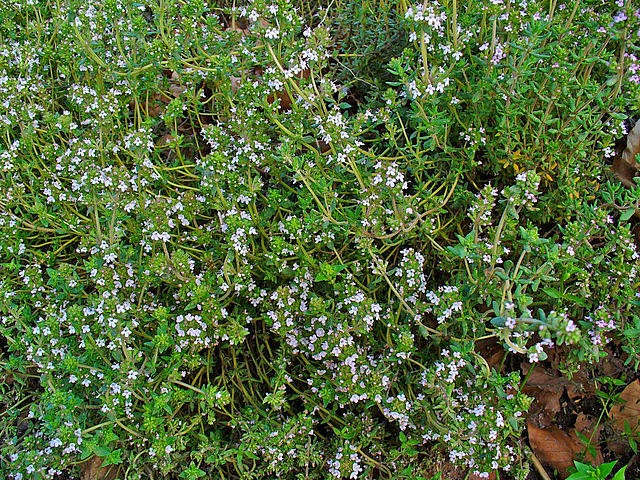
Herbes de Provence

Herbes de Provence
"Herbesdeprovence" by Flickr user: French Tart-FT ( http://www.flickr.com/photos/frenchtart/ ). Licensed under CC BY 2.0 via Wikimedia Commons - https://commons.wikimedia.org/wiki/File:Herbesdeprovence.jpg#/media/File:Herbesdeprovence.jpg

Tuesday, August 4, 2015

Weeding Zen

The Chore of Weeding: Zen? Really? 


Weeding is such a drag. Let's face it: weeding is boring, deadly dull. How in the world can weeding, arguably gardening's most tedious chore, be associated with Zen?

It depends, as with everything else, on your attitude. Weeding can be approached with dread, or it can be approached as an opportunity to relax and reduce stress. 

The next time you have to weed the garden, you might try the following meditation in motion: 

1. Sit comfortably; the lotus position is optional. You might want to use a durable cushion for added comfort.

2. Take three deep breaths. 

3. Think of all the stresses and bad habits you wish to remove from your life. 

4. Touch a weed and think of one of these stresses or bad habits. As you yank out the weed, visualize that stress or bad habit being yanked from your existence, forever. 

5. Keep doing this until you have run out of unpleasant, unfortunate tendencies to banish from your life. If weeds remain, you might think of various social ills that plague the world (war, various diseases, drought) and banish these ills. This strategy should yield you a weed-free garden and plenty of good karma.

By Jakub Kolář (Own work) [CC0], via Wikimedia Commons


Of course, another way to add zen to the chore of weeding is to use a guided meditation, with the help of an Ipod or similar device and headphones. One meditation I recommend , the Holy Dinger Uber Deep Meditation, is created by Leonie Dawson, founder of the Shining Biz and Life Academy (disclaimer: I am an affiliate for the Shining Biz and Life Academy: I use, recommend, and heartily endorse its programs).

May weeding chores be an opportunity for Zen-like peace for you. Happy gardening!


Tuesday, July 28, 2015

Joy of Cold Soups

Cold Soup for a Hot Day


Boy is it hot: really scorching outside. When it's this hot, that means it's time for . . . soup?  What?

Soup in the summertime seems counter intuitive, but that's where cold soups can really fit the bill, for several reasons:

1. They tend to use fresh produce, either from the garden or the farmer's market.

2. They come in savory options, if you want a something remotely traditional for a soup course, or sweet options, if you want a light dessert.

3. They are refreshingly delicious.

4. They can be made ahead of time, in the cool of the morning, and chilled for several hours.

By Gila Brand at en.wikipedia (Own work) [CC BY 2.5 (http://creativecommons.org/licenses/by/2.5)], via Wikimedia Commons


For savory cold soups, you can choose from vichyssoise, gazpacho, borscht, or cold cucumber soup, among others. You might try this cold Summer Squash Soup I made recently:

Cold Summer Squash Soup

4 medium yellow squash, sliced
1 yellow onion, chopped
4 TBSP butter
3 cups chicken broth
1/4 tsp. cayenne, or to taste
1 cup plain yogurt

Melt the butter and then saute the squash and onion until the vegetables are tender. Add the chicken broth; let the mixture come to a boil and then simmer it for five minutes. Let cool and then add the cayenne pepper.  Blend the mixture and return it to the pan. Whisk in the plain yogurt. Chill for at least one hour (preferably more) before serving. Serves 6-8.


For sweet soups, fresh fruits will play a starring role. Try strawberry soup or cherry soup: yum! You can even go old-school and make traditional Fruktsoppa (Swedish Fruit Soup).

To beat the summer heat, it's hard to beat cold soup, whether as a main dish, side dish, or dessert. Bon appetit!

Tuesday, July 21, 2015

Gardening and Grief

Gardening and Working through the Grieving Process


My father died May 1, 2015. He hadn't planned to do so, of course. Ever since then, I have been working through the five-stage grieving process--or seven-stage, depending on which model you choose to observe.

While I've been tending the container garden area, the main garden lies almost dormant this summer -- except for the asparagus plants and what I affectionately call "mystery squash": various squash seeds were started, and I failed to label them.

While I have been mourning my father, the main garden, sadly, has suffered from neglect: the weeds have taken over, the soil has not been enriched lately, and I've not planted anything new. Yes, El Niño has certainly played a role, with the torrential downpours that have occurred until recently, but still: grief has invaded the main garden.

By Angelsharum (Own work) [CC BY-SA 3.0 (http://creativecommons.org/licenses/by-sa/3.0)], via Wikimedia Commons


As I move into the acceptance phase of grieving, it is time to reclaim the garden.

In the cool of the morning or in the evening, accompanied by the cool, reassuring presence of Spirit, it is time to pull weeds. Yes, Ralph Waldo Emerson did say the following about weeds: "What is a weed? A plant whose virtues have not yet been discovered." Be that as it may, as I cast away weeds, I cast away regrets, the "might-have-beens," to be left with the good, loving memories of my father.

It is time to feed the soil, to nourish it, for fulfilling the promise of a vibrant, vital autumn garden: a second harvest and a second chance.

It is time to begin today.

By tending the garden, I tend my soul as well as my father's legacy: the lessons of love I have learned from him and his contributions towards making the world a better place. In his memory, I till the ground and plant the seeds of a promising tomorrow. Namaste and Blessed Be.

Tuesday, July 14, 2015

Sensual Pleasures of Summer

Summertime Pleasures through the Senses


Ahh: summer-- a bountiful time in the garden and in the kitchen, in the yard or on the front porch. This is a season of riches: of plentiful produce, of longer days, of increased opportunities to fulfill our wishes.

I can hear you now; "Are you crazy? It's so hot: it's 98 degrees in the shade, and the humidity makes it even worse. It's hot and sticky out there, sapping my energy. And did I mention that it's hot?"

Yes, it is hot--for part of the the day (okay, a good part of the day). Even so, this precious season brings certain sensual pleasures to enjoy: you may just have to enjoy some of these gifts in the early morning or late evening hours.What to do during the hottest part of the day? That's what siesta as for.

Sights


Summer is a time for rich color: vibrant greens, blues, pinks, yellows, oranges, and reds--seen in trees and flowers, fruits and vegetables of the garden. At the beach, the water seems bluer and the sand seems more golden. In the evening the fireflies dance in the air. Everything seems to shimmer brightly at this time of year.

Sounds


Summer is a glorious time for the sounds of birds chirping, or squawking, as well as the sounds of cicadas and crickets. What can compare to the sounds of waves lapping the shore at the beach or lake, or of the occasional summertime rain shower?


Textures


Summer is practically synonymous with being at the beach or lake and feeling the sand between the toes, followed by a cool dip in the water. In the summer, the gardener gets to enjoy the feel of succulent, ripe fruits and vegetables, ready for harvest.

Smells and Tastes


Summer tantalizes the senses of smell and of taste. The scents of flowers blooming, ripened produce, the smell dinner cooking on the grill (so as not to heat up the kitchen) are almost intoxicating. The taste of ice cream, homemade or store bought, tastes more refreshing during this season. And certain drinks -- iced tea, margaritas, and mint juleps -- truly make a summer afternoon or evening.

Enjoy the sensual pleasures of summer!


By Alfons Mucha [Public domain], via Wikimedia Commons
Add even more to your summer experience with the Creative Goddess ecourse, courtesy of Leonie Dawson's Shining Biz and Life Academy. Disclaimer: I am an affiliate of the Shining Biz and Life Academy and its programs because I believe in them and endorse them wholeheartedly.

Thursday, July 9, 2015

Getting Your Gardening Fix in an El Niño Year

Gardening in Spite of El Niño


This year, weather-wise, has been topsy-turvy because of the emergence of El Niño, which consists of warm water temperatures in the Pacific Ocean along the equator. This pattern can wreak havoc on anything related to weather, including gardening.

In my neck of the woods, we have been experiencing record rainfall, while other areas have been experiencing moderate to severe drought. Either scenario is going to affect gardening efforts.

While I have added to my container garden--cherry tomatoes, peppers, squash, and herbs--I have, honestly, not been able to do anything with the main garden this summer. While the weeds continue to grow higher than my head, I could start feeling frustrated and inadequate, not to mention resentful of this weather pattern, but what purpose would beating myself up mentally serve? This attitude would be a waste in emotional energy.

Instead, I've decided to take things a sunny day at a time. On the mornings or evenings it's not raining, I take an hour, or even two, to weed, to tend the container garden, or to prepare the main garden for a fall garden (in my area, a fall garden is feasible and practical). The "Tortoise and the Hare" fable definitely comes to mind here: I know I'll get there, eventually. It's a practice in delayed gratification at its finest.

An example of a container garden 


I have determined that the El Nino pattern could be seen as an obstacle, or it could be seen as an opportunity to slow down and to savor the garden, even if it's not "perfect." The truth is that a garden is always a work in progress: this realization becomes more obvious when one has to seize the gardening moment whenever it decides to present itself.

There's no use in fighting or resisting the El Niño weather pattern: that is an exercise in futility, and who needs that?

"Learn to be an observer in all seasons. Every single day, your garden has something new and wonderful to show you"  (Anonymous Author). This is a worthy goal and lesson--even in an El Niño year. 

Friday, March 20, 2015

Dreaming of a Spring Garden

Spring Vegetable Garden: Dream Big, but Start Small


Ahhh! Spring is here at last! It's time to shake ourselves out of hibernation mode and start digging in the dirt.

As with every year, I have a lofty aspiration of creating the vegetable garden that will surpass all others. This is a hopeful season, after all. In order to keep this goal realistic and manageable, I have created a path to get the garden to where I want it to be this year.

1. Test the garden soil: done. The garden soil's N-P-K ranges have graduated from depleted to deficient. We're making progress here!

2. Add soil amendments to the garden soil: in progress. Recent heavy rains are delaying this chore a bit, but we do need the rain so no complaints here. This year I'm adding blood meal (for nitrogen), bone meal (for phosphorus), and numerous, about a hundred or so,  Nori sushi roll wrappers, cut up (for potash), as well as good ol' reliable compost.

3. Plant snow peas, carrots, and Swiss chard (the rainbow variety) in the container garden area: mission accomplished.

4. Plan the main garden with an app: done. For a list of great gardening apps, you can't go wrong with Gardenista's "The Top Ten Gardening Apps You Need Now." 

5. Start tomato, cucumber, and squash seeds: partially complete. Some of the seedlings didn't make it, so I'll try again this weekend. I also want to start some pepper seeds--both hot and sweet varieties--at this time. One thing I really want to do is to start at least 90% of my plants from seed myself,  rather than rely on bought transplants.

6. Feed and mulch the blueberry planter box: done. I used pine bark mulch since the blueberry bushes are acid-loving plants.

7. Feed and mulch the strawberry plants: in progress.

8. Transplant the four citrus trees--Meyer lemon, key lime, grapefruit, and kumquat: mission accomplished. The trees are looking happy.

9. Transplant tomato, cucumber, squash, and pepper plants: in about a month to six weeks' time.

10. Keep the compost pile going: this is a continuous project.

11. Plant green beans, wax beans, collard greens, and basil: in a few weeks.

12. Mulch the main garden: in about six to eight weeks' time. This will cut down the weeding headaches tremendously.

13. Put a comfortable lawn chair near the garden area in order to relax and bask in the garden: soon, very soon.

Here's to making garden fantasies a reality! Happy Gardening!

By Spedona (Spedona) (Cliché personnel - own work) [GFDL (http://www.gnu.org/copyleft/fdl.html), CC-BY-SA-3.0 (http://creativecommons.org/licenses/by-sa/3.0/) or CC BY-SA 2.5 (http://creativecommons.org/licenses/by-sa/2.5)], via Wikimedia Commons

This is close to how I envision my garden in the making.


Monday, October 20, 2014

Gluten-Free and Sensual: A Delicate Balance

Gluten-Free and Good Taste Need Not Be Mutually Exclusive


Recently, I found out that, like about 18 million people, I have gluten intolerance: I have an allergy or sensitivity, depending on whom you ask,  to wheat, barley, and rye. With a wide range of symptoms such as weight gain, lactose intolerance, alternating bouts of diarrhea and constipation, headaches, and fatigue, this increasingly common, or increasingly diagnosed, condition needs to be considered. Those who are not directly affected by gluten intolerance are increasingly more likely to know of someone, a friend or loved one, who is affected by this condition.

What does all of this mean for Sensual Thymes? Having to go gluten-free does not mean having to give up good taste: it just means having to do a little more research to find suitable alternatives for recipes that contain gluten, such as finding a ready-made mix, or a make-it-yourself recipe, of flour substitute. It also means embracing foods that are naturally gluten-free and healthy, such as the vegetables, fruits, and herbs that you either grow in the garden or purchase. These natural gifts should take center stage.

One can honor the natural marriage of gardening and cooking, embracing an Epicurean ideal, without sacrificing quality. I believe this in every fiber of my being.

 I am still learning all of the gluten-free tricks--it's a bit of a learning curve, but I will pass along whatever I glean.

For my part, in a concerted effort to be as inclusive as possible, I will offer gluten-free and sugar-free (for my diabetic friends and readers) options to any recipes I post. I want everyone to be able to join the party. In that spirit, bon appetit: always.

By Jina Lee [CC-BY-SA-3.0 (http://creativecommons.org/licenses/by-sa/3.0)], via Wikimedia Commons


On another note: The Creative Goddess ecourse offered by the Amazing Biz and Life Academy can make a impact in your overall creativity. While the course does not focus specifically on the culinary arts, what you learn from the ecourse can be transferred to cooking. This course has made a difference in my own life, and I recommend it heartily. Disclaimer: I am an affiliate for the Amazing Biz and Life Academy; I maintain an affiliate relationship only with companies that I fervently support and believe in.

Monday, October 6, 2014

Sage: Herb of the Month

Sage: A Wise Herb


Each month, I pick an herb somewhat arbitrarily but usually one that suggests the month's season. Sage, or salvia officinalis, is the herb of honor for October 2014.

Sage is a shrubby herb that traditionally has grey-green, slightly fuzzy leaves, but some cultivated varieties include purple sage and red sage. It has a slightly peppery scent and flavor. Sage grows in the U.S. Hardiness zones of 5-9, so this is one flexible herb.

Sage is one of the easy-to-grow herbs: you can start this herb from seed or from established plants. Give sage a nice sunny spot in the garden or herb box, water it occasionally, and this perennial will reward you with savory leaves for culinary or medicinal purposes.

By aomorikuma (Sony Cyber-shot DSC-P2) [GFDL (http://www.gnu.org/copyleft/fdl.html) or CC-BY-SA-3.0 (http://creativecommons.org/licenses/by-sa/3.0/)], via Wikimedia Commons


In the kitchen, sage can be used in stuffing, to season poultry, or added to many sausage recipes. Sage can also be made into a tea in order to treat, naturally, a laundry list of ailments, including sore throat, gastrointestinal upset, and fever. Sage, as a tea, or even sniffing the leaves, is also reputed to help improve memory.

Sage can also be burned to cleanse the area of negative energy. You will often find bundled sage sticks sold for this purpose.

And now for some "sage" advice: I recently experienced the Radiant Goddess E-Course, offered by Leonie Dawson's Amazing Life + Biz Academy, and it has been a life-changer. This e-course has been an empowering tool physically, mentally, and emotionally, and I highly recommend it. Disclosure: The Amazing Biz + Life Academy links are affiliate links. I only use affiliate links for products and services that I genuinely and wholeheartedly endorse.


Monday, September 22, 2014

Herb of the Month: Thyme

Thyme, the Namesake of this Blog, as Herb of the Month


Each month, an herb shines in the spotlight: its scent, flavor, even literary associations may make it a candidate for adulation. This month, thyme, also known as Thymus vulgaris, takes the stage.

Thyme is a tiny plant with a bold flavor and scent. In the herb garden, thyme, a perennial,  is easy to grow: just plant it in a reasonably sunny area and water it occasionally. Bees love thyme, so this is a good herb to encourage bee populations--an important consideration in the increasing times of bee colony collapse.

"Thymus vulgaris 001" by H. Zell - Own work. Licensed under Creative Commons Attribution-Share Alike 3.0 via Wikimedia Commons - http://commons.wikimedia.org/wiki/File:Thymus_vulgaris_001.JPG#mediaviewer/File:Thymus_vulgaris_001.JPG


For such a small herb, thyme has a pronounced flavor. Try this herb added to poultry, soups, and stews: perfect for the emerging colder weather. In addition, I like to saute tomatoes with thyme and black pepper for an intriguing side dish.

"Thymus vulgaris". Licensed under Creative Commons Attribution-Share Alike 3.0 via Wikimedia Commons - http://commons.wikimedia.org/wiki/File:Thymus_vulgaris.jpg#mediaviewer/File:Thymus_vulgaris.jpg


Medicinally, this herb contains thymol, which has antiseptic properties. For this reason, many natural mouthwashes contain the essential oil of thyme. Thyme can also be used to treat bronchitis and other infections.

For its versatility and beauty, thyme deserves its place as herb of the month. Enjoy, and bon appetit! 


Monday, September 15, 2014

Fiction, Nonfiction, and Poetry That Inspire the Love of Gardening

Gardening and Literary Inspiration: Read On! 

At this time of year, when the summer garden is all but spent and the fall garden is still but a dream, we need all the inspiration we can get. Literature can provide that inspiration, in spades (pun intended)

Fiction and Nonfiction Books that Inspire the Love of Gardening


Garden Spells, by Sarah Addison Allen

The Secret Garden, by Frances Hodgson Burnett

Diary of a Worm, by Doreen Cronin

The Complete Book of the Flower Fairies, by Cicely Mary Barker

In The Garden Trilogy: Blue Dahlia, Black Rose, and Red Lily, by Nora Roberts

The Care and Handling of Roses with Thorns, by Margaret Dilloway

The Inward Garden: Creating a Place of Beauty and Meaning, by Julie Moir Messervy

The Red Garden, by Alice Hoffman

The Ruth Stout No-Work Garden Book, by Ruth Stout

A Hoe Lot of Trouble, by Heather Webber

Garden of Secrets Past, by Anthony Eglin

Night Gardening, by E. L. Swann

Forget Me Not, by Isabel Wolf

The Memory Garden, by Mary Rickert

The Forgotten Garden, by Kate Morton

Death in the Orchid Garden, by Ann Ripley

Garden of Madness, by Tracy L. Higley

The Star Garden, by Nancy E. Turner

Tomorrow's Garden, by Amanda Cabot

Buckingham Palace Gardens, by Anne Perry

The Dark Garden, by Eden Bradley

In the Garden of Stone, by Susan Tekulve

Walden, or, Life in the Woods, by Henry David Thoreau

Short Stories with a Gardening Emphasis


"Rappaccini's Daughter," by Nathaniel Hawthorne

"The Chrysanthemums," by John Steinbeck

"A Rose for Emily," by William Faulkner (okay, this one is a stretch: enjoy the story anyway)

"The Garden Party," by Katherine Mansfield

"The Occasional Garden," by Saki

"The Garden of Forking Paths," by Jorge Luis Borges


Poetry with a Gardening Theme


"The Garden," by Andrew Marvell

Leaves of Grass, by Walt Whitman

"La Belle Dame Sans Merci," by John Keats

"The Daffodils," by William Wordsworth

"This Lime Tree Bower my Prison," by Samuel Taylor Coleridge

"The Gardener," by Robert Louis Stevenson

"The Deserted Garden," by Elizabeth Barrett Browning

"This is the garden: colors come and go," by e.e. cummings

"The Little Garden," by Amy Lowell


Here's to inspiration: happy reading!

By Simon Speed (Own work) [CC0], via Wikimedia Commons