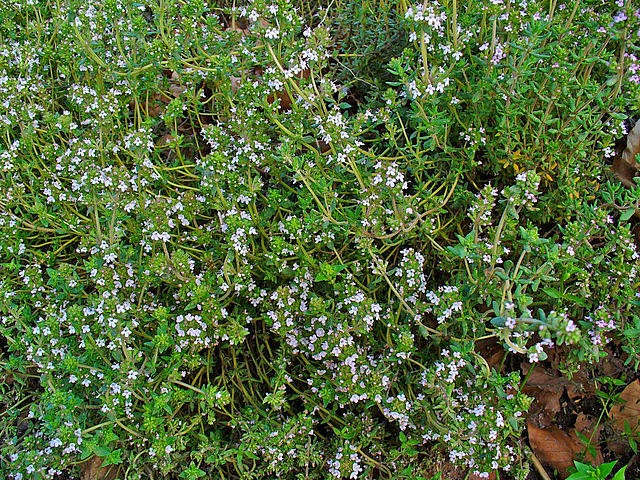
Herbes de Provence

Herbes de Provence
"Herbesdeprovence" by Flickr user: French Tart-FT ( http://www.flickr.com/photos/frenchtart/ ). Licensed under CC BY 2.0 via Wikimedia Commons - https://commons.wikimedia.org/wiki/File:Herbesdeprovence.jpg#/media/File:Herbesdeprovence.jpg
Showing posts with label herb. Show all posts

Wednesday, October 14, 2015

Sage: Herb of the Month

Sage Advice for the Garden

This month's herb of honor is sage, or salvia officinalis. As with many herbs, sage is easy to grow: just give it a spot in the garden with at least partial sun, and water sparingly in order to concentrate the herb's essential oils. For best flavor and continued production, pinch off any flowers that develop.

To me, sage suggests fall flavor: roasted herbal chicken and turkey, pork loin, dressing, and hearty soups, such as this recipe for Butternut Squash Soup.  Sage suggests Halloween and Thanksgiving, with its special dishes. Sage suggests family gatherings and time well spent with loved ones. Bon appetit!

Forest & Kim Starr [CC BY 3.0 (http://creativecommons.org/licenses/by/3.0)], via Wikimedia Commons


Check out the Autumn Abundance Sale going on at Sol Luna Enterprises: enjoy 25% off on orders of $25 and over. The coupon code is FALLSAVINGS. This sale lasts through October 31, 2015, so don’t miss out!


One gift idea, just in time for the holidays: a membership to the Shining Biz + Life Academy, chock full of personal and business e-courses, videos, and meditations for just $497 a year for the complete package or for $197 a year for the Life Academy package (for those who don't have a business and are not interested in pursuing this route). This is a fantastic gift idea for a loved one, or even for yourself. Check out this opportunity today. Disclaimer: I am an affiliate for the Shining Biz + Life Academy and all of its services. I use and heartily endorse this program.

Please fill out my free, anonymous survey Getting to Know You

Create your own user feedback survey


Subscribe to our mailing list

* indicates required


Email Format


Tuesday, September 15, 2015

Chives: Herb of the Month

Chives: Mild and Versatile


Chives, or Allium schoenoprasum, are September's herb of the month. Chives are a perennial herb that is completely edible--even the blossoms.

Chives, as with many of the herbs I discuss and use myself, are easy to grow; however, they do need for the weather to cool off a bit (where the highs are not in the 90s). Chives can be grown from seed, but you may find it worthwhile to transplant already established chive plants instead: I know I do.

This herb revels in full sunlight. Water sparingly in order to concentrate the flavors. Divide the clumps every two to three years or so.

In the kitchen, chives are delightfully versatile. Try fresh chives snipped over a hearty potato soup, mixed with cream cheese to top a bagel, added to many vegetables--not just potatoes, and many more uses. The possibilities are limited only by your imagination. Bon appetit!


By Jerzy Opioła (Own work) [GFDL (http://www.gnu.org/copyleft/fdl.html), CC-BY-SA-3.0 (http://creativecommons.org/licenses/by-sa/3.0/) or CC BY-SA 2.5-2.0-1.0 (http://creativecommons.org/licenses/by-sa/2.5-2.0-1.0)], via Wikimedia Commons


The Big Shining September Sale!

For 30 days only we’re offering a super affordable extended payment plan for the Shining Biz + Life Academy!! From now until September 30, join the Academy with 12 Payments of $49.95.

About the Academy:

The Shining Biz & Life Academy is a divinely-guided, wildly-affordable and deeply-powerful success library that’s just a fraction of the cost you see elsewhere.
It is chock-full of programs & resources to help you shine in every area of your biz + life, it’s one of the most generously-priced, powerfully inspired transformational training systems you’ll find, ANYWHERE in the world. Upon joining, you will receive the following:
  • Powerful business + marketing training to help you start + grow your dream biz rapidly + happily
  • E-courses to supercharge your creativity, wrangle your fears + become a marketing maven
  • Illustrated workbooks to create clarity + intention across your life & biz
  • Audio meditations to soothe your soul
  • Tips to get your house de-cluttered + your inner world in order
  • Cleanses to bring your body into health + radiance
  • Videos trainings, audio inspirations and workbooks to unlock your abundance, free your creativity and allow your heart and soul to shine
This special deal is only for a limited time, so don’t delay!


Check out the Autumn Abundance Sale going on at Sol Luna Enterprises: enjoy 25% off on orders of $25 and over. The coupon code is FALLSAVINGS. This sale lasts through October 31, 2015, so don’t miss out!


Please fill out my free, anonymous survey Getting to Know You

Create your own user feedback survey


Subscribe to our mailing list

* indicates required


Email Format


Tuesday, September 1, 2015

Planting a Medicinal Garden

Grow Your Own Medicine Cabinet


As I write this, I am getting over the throes of a nasty head cold. What better time than now to plan a simple medicinal garden?

The following plants would be great additions for an all-purpose medicinal garden. All are fairly easy to grow in either a traditional garden or in a container garden:

Aloe vera: Buy established plants and transplant. Good for treating minor burns and scrapes: just break a leaf and apply the serum to the affected area. 

Calendula: Buy established plants and transplant, or sow from seed. Made into an infusion, calendula is a good all-purpose antiseptic wash; you can also make a balm.

Cayenne: Buy established plants and transplant, or sow from seed. Good ingested as a cold remedy and can also be made into a cream to relieve muscle aches. Caution: when handling any hot peppers, wear gloves. Trust me on this one.

Chamomile: Sow from seed. Made into a tea, chamomile is good for treating stomach upset and for inducing sleep. 

Ginger root: Buy the root and cut it up; plant each piece. Ginger root is the number one treatment for nausea and is good for stomach upset. 

Echinacea: Buy established plants and transplant,  or directly sow the seed. Use the root as a decoction at the first sign of a cold. 

Feverfew: Buy established plants and transplant. This herb is great for fevers as well as headaches, even relieving migraines for some people. 

Lavender: Buy established plants and transplant. This herb prefers a slightly alkaline soil, so it's best to plant it in its own container or planter box. Made into an oil or infusion, lavender can be used to heal cuts, stings, and burns, as well as insomnia and not a few other woes. 

Lemon balm: Buy established plants and transplant, or sow directly from seed. This member of the mint family is great for cold relief as well as digestive complaints. 

Mint, especially peppermint: Buy established plants and transplant, or sow directly from seed. This herb is great for relieving gas and stomach upset, as well as relieving muscle pain when made into a balm. 

Rosemary: Buy established plants and transplant. Made into an infusion, this herb is wonderful for digestive issues and headaches. 

Sage: Buy established plants and transplant. Sore throat relief and alleviation of hot flashes are but two of sage's gifts. 


By User:Mattes (Own work) [Public domain], via Wikimedia Commons Medicinal Container Garden of My Dreams

If you want to consult an herbal handbook, I recommend the following books:

Culpepper's Complete Herbal: A Book of Natural Remedies for Ancient Ills.

Walter Last's The Natural Way to Heal: 65 Ways to Create Superior Health.

The New Age Herbalist: How to Use Herbs for Healing, Nutrition, Body Care, and Relaxation.

500 Formulas for Aromatherapy: Mixing Essential Oils for Everyday Use.


Check out the Autumn Abundance Sale going on at Sol Luna Enterprises: enjoy 25% off on orders of $25 and over. The coupon code is FALLSAVINGS. This sale lasts through October 31, 2015, so don’t miss out!


Please fill out my free, anonymous survey Getting to Know You
Create your own user feedback survey

Subscribe to our mailing list

* indicates required


Email Format


Tuesday, August 18, 2015

Herb of the Month: Mint

Refreshing, Versatile Mint

If you want to grow an herb that thrives well and is difficult to kill, look no further than mint (botanical name Mentha). The many varieties of mint--peppermint, spearmint, apple mint and other fruit mints, even chocolate mint--are easy to grow and, once established, will produce copious amounts of fragrant leaves.

Growing Mint in the Garden

Again, mint is easy to grow--perhaps too easy. This herb can be invasive, so it's a good idea to plant it in a pot so that it doesn't take over the entire garden. Make sure the herb receives direct or partial sun, as well as plenty of water: it is all but impossible to over water mint. Some people I know plant mint right underneath a dripping water faucet, for example.

By Mokkie (Own work) [CC BY-SA 3.0 (http://creativecommons.org/licenses/by-sa/3.0)], via Wikimedia Commons


Harvesting and Using Mint

Pick leaves as needed, preferably before 10:00 a.m.--or before the day's heat arrives-- on the day you need them. Mint can be steeped in tea and enjoyed in its own right, or it can be taken for stomach upset and flatulence, among other stomach ailments. Mint can also be bruised and added into a sugar syrup: this sugar syrup can be added to various homemade desserts and candies, as well as the famed Mint Julep. And let's not forget about mint jelly.

Even sniffing the bruised mint leaves can be beneficial. The other day, the air conditioner in my house decided that it was a good day to die. While waiting for the air conditioner to be fixed, I found that sniffing mint leaves made it seem as if I were cooler: this is a handy psychological trick.

If there is a perfect herb, mint would be it. Happy gardening, and bon appetit!


Monday, October 6, 2014

Sage: Herb of the Month

Sage: A Wise Herb


Each month, I pick an herb somewhat arbitrarily but usually one that suggests the month's season. Sage, or salvia officinalis, is the herb of honor for October 2014.

Sage is a shrubby herb that traditionally has grey-green, slightly fuzzy leaves, but some cultivated varieties include purple sage and red sage. It has a slightly peppery scent and flavor. Sage grows in the U.S. Hardiness zones of 5-9, so this is one flexible herb.

Sage is one of the easy-to-grow herbs: you can start this herb from seed or from established plants. Give sage a nice sunny spot in the garden or herb box, water it occasionally, and this perennial will reward you with savory leaves for culinary or medicinal purposes.

By aomorikuma (Sony Cyber-shot DSC-P2) [GFDL (http://www.gnu.org/copyleft/fdl.html) or CC-BY-SA-3.0 (http://creativecommons.org/licenses/by-sa/3.0/)], via Wikimedia Commons


In the kitchen, sage can be used in stuffing, to season poultry, or added to many sausage recipes. Sage can also be made into a tea in order to treat, naturally, a laundry list of ailments, including sore throat, gastrointestinal upset, and fever. Sage, as a tea, or even sniffing the leaves, is also reputed to help improve memory.

Sage can also be burned to cleanse the area of negative energy. You will often find bundled sage sticks sold for this purpose.

And now for some "sage" advice: I recently experienced the Radiant Goddess E-Course, offered by Leonie Dawson's Amazing Life + Biz Academy, and it has been a life-changer. This e-course has been an empowering tool physically, mentally, and emotionally, and I highly recommend it. Disclosure: The Amazing Biz + Life Academy links are affiliate links. I only use affiliate links for products and services that I genuinely and wholeheartedly endorse.


Monday, September 22, 2014

Herb of the Month: Thyme

Thyme, the Namesake of this Blog, as Herb of the Month


Each month, an herb shines in the spotlight: its scent, flavor, even literary associations may make it a candidate for adulation. This month, thyme, also known as Thymus vulgaris, takes the stage.

Thyme is a tiny plant with a bold flavor and scent. In the herb garden, thyme, a perennial,  is easy to grow: just plant it in a reasonably sunny area and water it occasionally. Bees love thyme, so this is a good herb to encourage bee populations--an important consideration in the increasing times of bee colony collapse.

"Thymus vulgaris 001" by H. Zell - Own work. Licensed under Creative Commons Attribution-Share Alike 3.0 via Wikimedia Commons - http://commons.wikimedia.org/wiki/File:Thymus_vulgaris_001.JPG#mediaviewer/File:Thymus_vulgaris_001.JPG


For such a small herb, thyme has a pronounced flavor. Try this herb added to poultry, soups, and stews: perfect for the emerging colder weather. In addition, I like to saute tomatoes with thyme and black pepper for an intriguing side dish.

"Thymus vulgaris". Licensed under Creative Commons Attribution-Share Alike 3.0 via Wikimedia Commons - http://commons.wikimedia.org/wiki/File:Thymus_vulgaris.jpg#mediaviewer/File:Thymus_vulgaris.jpg


Medicinally, this herb contains thymol, which has antiseptic properties. For this reason, many natural mouthwashes contain the essential oil of thyme. Thyme can also be used to treat bronchitis and other infections.

For its versatility and beauty, thyme deserves its place as herb of the month. Enjoy, and bon appetit! 


Monday, August 11, 2014

Herb of the Month: Lemon Balm

Lemon Balm: A Blissful Herb for August


Each month we are focusing on a particular herb, looking at its growing and cooking potential. This month, the honor belongs to lemon balm, also known as melissa officinalis. This member of the mint family is great for inducing and inspiring calm and tranquility.The balm in the herb's name also hints at the health benefits that this plant offers. Lemon balm, according to the University of Maryland Medical Center,  helps to alleviate stress, insomnia, anxiety, and indigestion.

Nicholas Culpeper, the Early Modern author of Complete Herbal and English Physitian (1652), has further suggestions in how to use this herb: he says that it is good for women recovering from childbirth and may be used to disinfect certain skin irritations, among other maladies; not only can lemon balm be steeped as a tea but can also be steeped in wine.

How to Grow Lemon Balm


Pick a nice sunny spot: a large pot or planter box works fine. Either sow the lemon balm from seed or transplant the plants. Water well, as for mint. Once lemon balm is established--give it a couple of weeks--make sure that the herb is watered regularly. Like other members of the mint family, lemon balm will spread if not contained; also, like other members of the mint family, lemon balm is (happily) difficult to kill.

http://upload.wikimedia.org/wikipedia/commons/0/07/Lemon_balm_2.JPG


How to Use Lemon Balm in Cooking


If you want an uplifting herbal tea, look no further than lemon balm. This light, citrusy flavored herb tastes great infused in a tea; sweeteners are optional. As an alternative, you can add the bruised leaves to a pitcher of ice tea and let it set for several hours before drinking for a refreshing beverage. As the Herb Society of America points out, the leaves are better used fresh than dried.

Lemon balm can also be used to flavor poultry and fish, and it can also be added to salad greens. The possibilities are nearly limitless.

Have you yet tried lemon balm? If not, I highly encourage you to try this herb. Bon appetit!


Monday, July 7, 2014

Basil: Herb of the Month

Basil, Take a Bow: Herb for July 2014

Each month, I'll be featuring a herb, chosen seasonally but otherwise randomly. This month, the herb of honor is basil, or Ocimum basilicum L. 

By Quadell (Own work) [CC-BY-3.0 (http://creativecommons.org/licenses/by/3.0)], via Wikimedia Commons Basil 


Basil is easy to grow and difficult to kill: an attractive feature for beginning gardeners and seasoned gardeners alike. Basil is easily sprouted from seed or transplanted from established plants.This herb prefers a sunny spot in the garden; water once or twice a week to keep the plants healthy without diluting the essential oils that give basil its characteristic aroma and taste. There is no need to fertilize the basil plants: less is definitely more here. Grow basil and tomatoes together: basil is an excellent partner in companion planting. 


By www.openfootage.net (http://www.openfootage.net/?p=386) [CC-BY-3.0 (http://creativecommons.org/licenses/by/3.0)], via Wikimedia Commons


Of course, basil is an essential ingredient in pesto: this recipe is a great one to try. I also like to make a basil vinegar that can be used to make salad dressing or marinade. Here's the recipe: 

Basil Vinegar


2 cups fresh basil leaves, washed well and slightly bruised
4 cups white vinegar

Place basil leaves in a gallon-sized canning jar. Heat the vinegar until it is hot but not boiling. Pour the vinegar over the basil leaves. Close the canning jar and give the jar a good shake or two. Let the vinegar steep for one month; shake the contents every few days. 

Strain the vinegar; compost the spent basil leaves. 

Bon appetit! 


Friday, June 14, 2013

Why Gardening? Why Not?

In recent years, more people have turned to gardening as a hobby, honoring a tradition that was practiced by our grandparents and great-grandparents. Whether spurred by the economy or a need to get back to basics, gardening is enjoying a tremendous revival. According to the National Gardening Association, the number of people planning to grown their own food increased by 19% from 2008 to 2009; more recently, according to a 2013 National Gardening survey, about two million more people expressed an interest in "lawn and garden activities," an increase of 2% over the previous year.

Gardening has a legion of benefits:

1. Gardening is good, all-purpose exercise. The digging, hoeing, raking, lifting, squatting, and similar activities will involve muscles you never knew you had. You probably want to supplement gardening activities with others, such as walking, jogging, swimming, or lifting weights, but this activity will get the body moving.

2. Vegetable and herb gardening, as well as small fruit and tree fruit gardening, bless your table with the most enticing, freshest possible foods. Store-bought produce, while convenient, just cannot compare to the fresh taste and texture of produce picked just minutes before from the garden.

3. Gardening can save you money in the long term. Growing your own vegetables and herbs, or other produce,  encourages you to consume them more often, leading to less waste overall.

4. With gardening, you know exactly which fertilizers and pesticides have been used because you have made those decisions yourself. You get to decide whether to grow organically--using compost, for example,  or to use commercial items to build up the soil, feed the plants, and discourage pests.

5. Gardening is a great mood-lifter or mood stabilizer. Whenever I am out of sorts, my loved ones tell me to "go play in the dirt already." Feeling the richness of the soil, the soft silkiness of flower petals, and the like brings a peaceful calm. Even the act of weeding can be Zen-like (yes, it can). Gardening is cheaper than medication and has none of the side effects.

6. Gardening lets you be more in tune with the seasons. Just the act of planning which seeds to plant during the cool season (what Texans call "winter")--peas, lettuces, carrots, for example--and during the warm to hot season (for Texans, this is eight to ten months out of the year)--beans, tomatoes, peppers, and the like--will heighten your appreciation of what each season has to offer.

7. If you have children, gardening can be an excellent way to teach about nature's cycles. Besides, this activity gets children out of the house and away from the television or computer for awhile.

8. Gardening allows you to be creative. You can experiment with different color combinations and garden layouts (formal, semi-formal, and informal; themed gardens, such as clock gardens--these are floral gardens that feature flowers that open up during different times of the day). You can add accessories, such as a bird bath or wind chimes. The possibilities are limited only by your imagination.

9. Gardening need not demand a lot of space. If you live in an apartment, for instance, container gardening may be for you. If you have a window sill, you have enough space to start your own garden.

10. Gardening can be a spiritual activity. When you are working or just admiring your garden, you are witnessing the miracle of life unfold, each and every day. You can appreciate this miracle as is, or you can add prayer and/or meditation to the experience.

What are your thoughts on gardening? Are you a veteran gardener, or are you a beginner who is eager to get  his or her feet dirty? Please feel free to share your comments.